When the Stakes Are High,
Strategy Is Not Enough
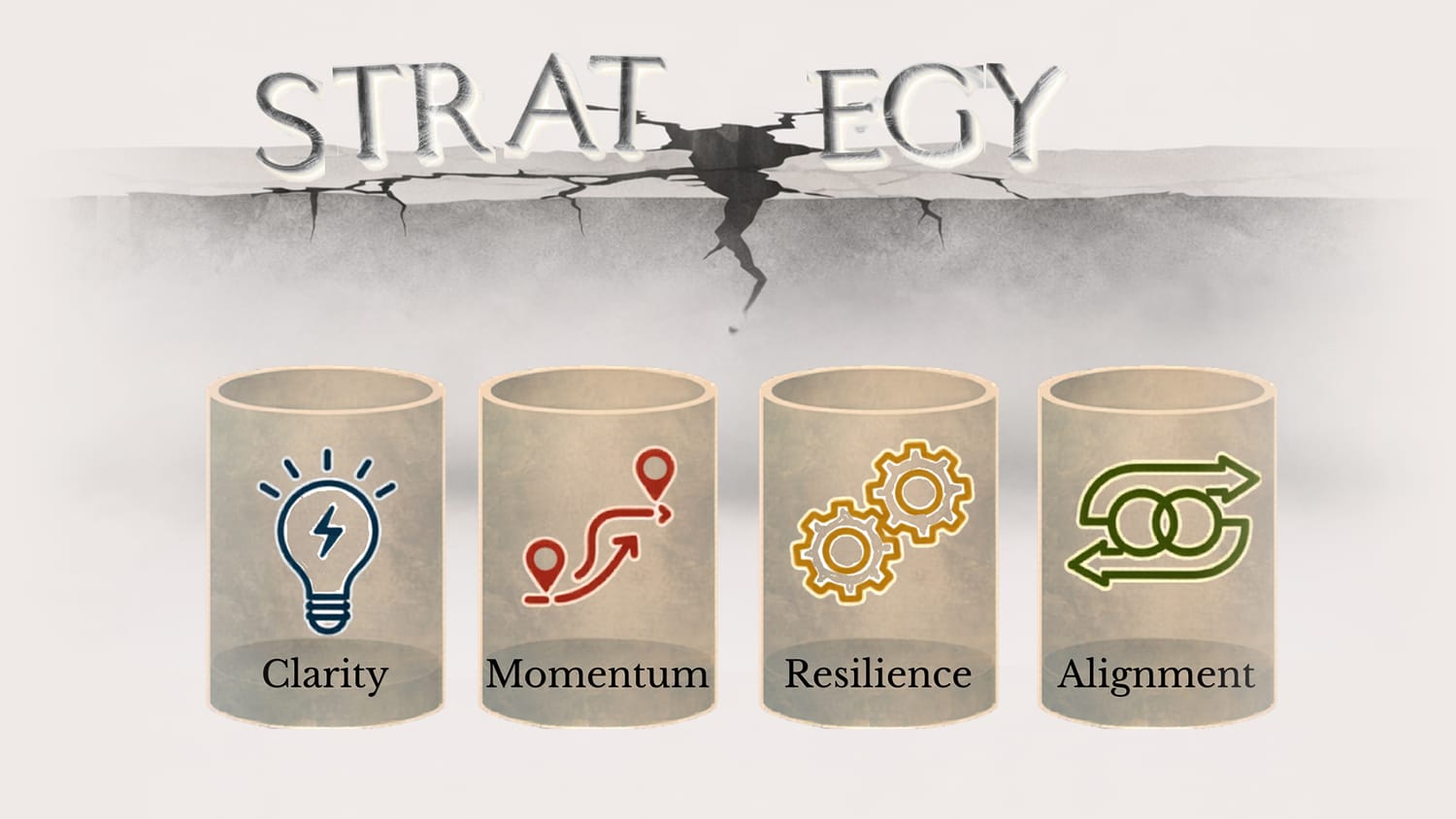
Leaders don’t fail because they lack ideas.
They fail because of what happens after the strategy is set.
I work with senior leaders on high-stakes decisions —
particularly when something important is not working as expected.
This Will Feel Familiar
Most leaders I work with are dealing with one of three things:
A major transformation — AI, digital, platform — that you’re betting the future on… and it’s not moving as fast as expected
A new growth initiative where you’ve already invested time, money, and reputation… and you’re starting to wonder if it’s really working
Or stepping into a role where you’re trying to figure out… what’s actually working — and what’s just been carried forward
If you’re in one of these situations, the issue is rarely the idea.
It’s what happens next.
The Hidden Failure Points
Strategic bets don’t fail because they are wrong.
They fail because leaders miss three critical moments:
Playing the wrong game
Running on the wrong system
Not hearing the real story
These are not obvious — until they become expensive.
The Lens I Use
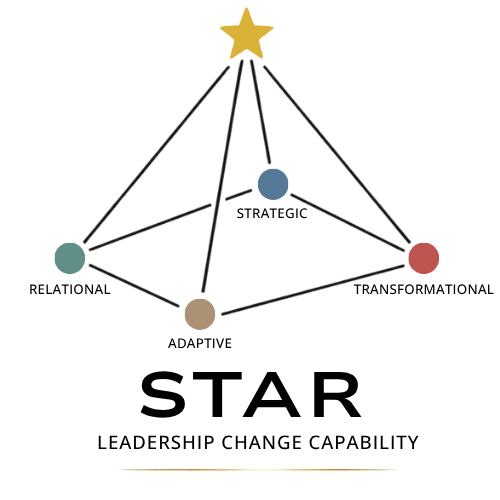
After 25 years working with leaders across global organisations, I've found that the difference between change that succeeds and change that fails comes down to four capacities.
Not all four are weak — but in every situation where something is not working, at least one of them is.
Strategic
WITHOUT THIS:
Leaders optimise — and miss the future
WITH THIS:
Leaders shape direction before others see the shift
Transformational
WITHOUT THIS:
Initiatives stall — the system fights the strategy
WITH THIS:
Change gets designed and delivered
Adaptive
WITHOUT THIS:
Bad bets fail slowly — while everyone watches
WITH THIS:
Decisions get made earlier, before the cost compounds
Relational
WITHOUT THIS:
Leaders get managed — not told the truth
WITH THIS:
Difficult truths surface — and better decisions follow
How I Work
I get called in when leaders need to decide:
Is this the right bet?
Are we set up to make it work?
What needs to change — now — before the cost compounds?
Most engagements begin with a single conversation, where we get clear on what's actually happening and whether working together makes sense.
How We Can Work Together
I work with leaders in three ways — each designed for a different moment, and a different need.

Strategic Decision
For high-stakes decisions where the cost of getting it wrong is too high
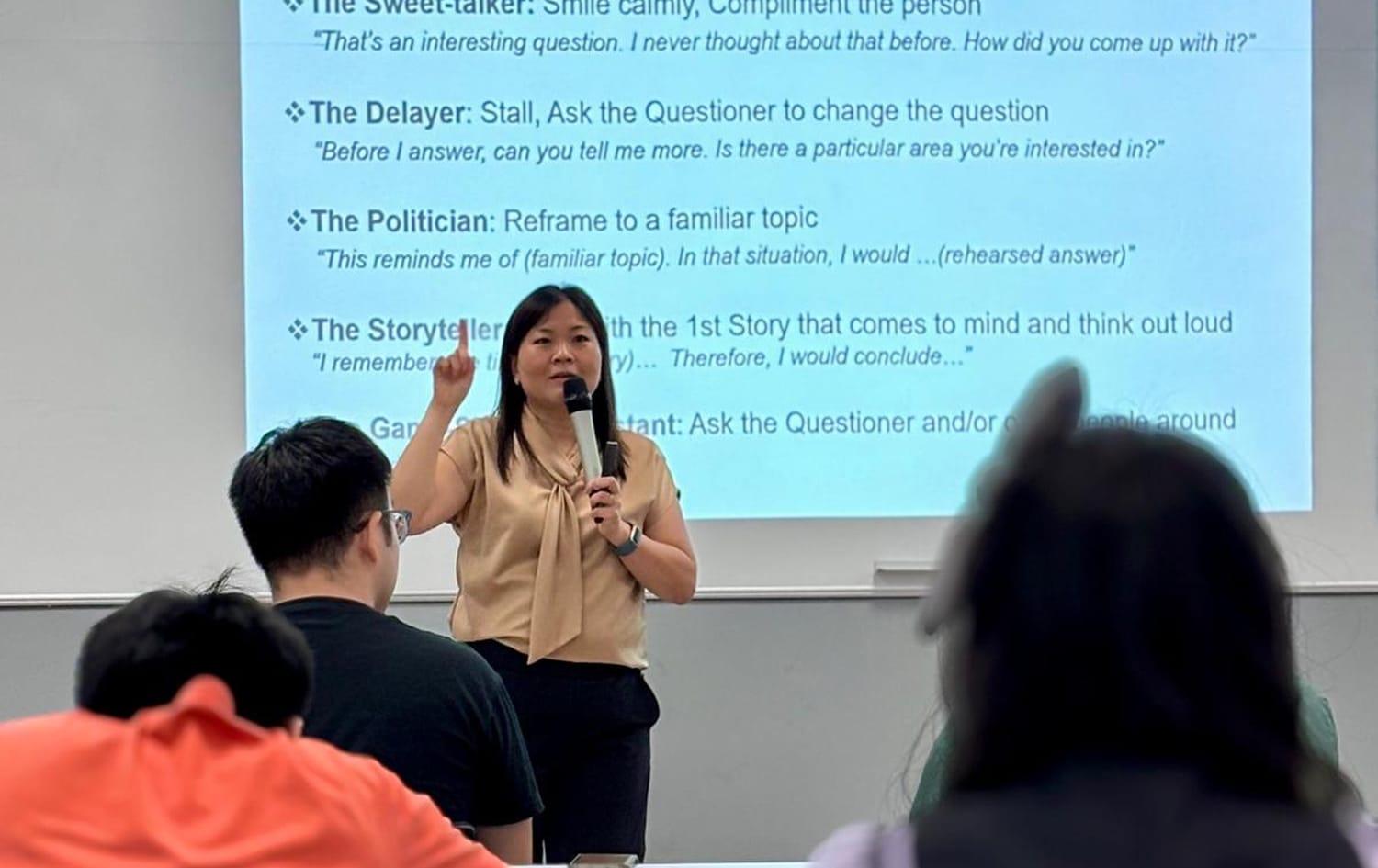
Leadership Workshops
For leadership teams navigating a live challenge, not a case study

Keynote Speaking
For leadership offsites where the team needs a sharper lens, not more motivation
About Adeline Ng
Adeline Ng has spent 25 years inside high-stakes decisions — not advising from a distance, but accountable for the outcomes.
She started at McKinsey, earned her MBA at Harvard Business School, and spent the next two decades in senior leadership at Coca-Cola, IHG, and Danone — leading strategy, launching new ventures, and navigating complex transformations that don't come with a clear playbook. She has architected billion-dollar growth plans, launched category-defining brands, and led joint ventures across Asia, the US, and Europe.
She also co-founded her own venture — building it from zero — which gave her a different kind of education entirely.
That combination — strategic rigour, execution experience from inside global organisations, and the hard-won perspective of a founder — is what she brings to the leaders she works with now.
She is not teaching frameworks she read about. She is drawing on decisions she has made, bets she has placed, and moments where the cost of getting it wrong was real.
At a Glance
McKinsey & Company — Strategy Consultant, Singapore and US
Harvard Business School — MBA
Coca-Cola ASEAN — Head of Strategy and Insights across 10 markets, Led complex Joint Venture and new category expansions
IHG AMEA — VP Strategy across 33 markets
Danone WhiteWave— Led Strategy, Finance and Innovation; launched multiple ventures, including category leader Silk Almond
Innosight — Disruptive Innovation Consultant at the firm founded by Clayton Christensen (The Innovator's Dilemma)
CEO and Co-founder, Virtual EMDR — world's largest online EMDR platform
CEO Advisor, LinHart Group — strategic advisor to CEOs at growth inflection points
Finalist, World Championship of Public Speaking. Two-time Singapore Speech Champio
The leaders who call Adeline are not looking for a consultant. They are looking for someone who has been where they are — and can help them see what they cannot see from inside it.
"We'd had 10 straight years of double-digit growth, then hit a wall — and lost a key leader in the middle of it. I needed someone I could trust with the real picture. Adeline helped us see what we couldn't see and make decisions we'd been avoiding. Twelve months later, we're growing again."
— CEO, Mid-sized Services Company
Organizations worked with:


































Organizations worked with:
If This Feels Familiar
If you’re working on something where the stakes are high — and you’re not fully sure you’re getting it right —
That’s usually when I get the call.


This short diagnostic assesses four critical leadership capabilities required to deliver transformation: Strategic, Transformational, Adaptive, and Relational capacity.
Relational Capacity
As leaders become more senior, something quietly changes.
They hear less of the truth.
Not because people are dishonest — but because people are careful. In high-stakes environments, information gets filtered before it reaches the top. What you hear has already been shaped by what people think you want to hear, or what feels safe to say.
In high-stakes situations, the quality of your decisions depends entirely on the quality of your information.
What this looks like in practice:
Recognising when what you're hearing has already been managed
Creating conditions where difficult truths can actually surface
Responding in ways that reward honesty rather than punish it
Drawing on the work of Tsun-yan Hsieh — one of the most respected voices on leadership and conversation — this capacity is about what leaders do in pivotal moments: whether a conversation opens up the truth, or closes it down.
If people only tell you what's safe to say — you're not leading. You're being managed.
Adaptive Capacity
Most bad bets don't fail fast.
They fail slowly — while everyone watches it happen.
The signs are usually visible early. Traction isn't building the way it should. The early adopters aren't converting. The team is working harder but the numbers aren't moving. The challenge isn't the absence of information — it's the willingness to act on it before the cost compounds.
What this looks like in practice:
Recognising when traction is not what it should be — early, not late
Avoiding the trap of escalating commitment to a path that isn't working
Making the call: double down, redesign, or stop
Adaptability is not about reacting faster.
It's about deciding earlier.
Transformational Capacity
Most transformation efforts are well-designed on paper.
They fail in the system they're trying to change.
The incentives still reward the old behaviour. The structure still reflects the old priorities. The metrics still measure the old outcomes. You cannot run a new strategy on a system built for a different one — and yet most organisations try to do exactly that.
What this looks like in practice:
Identifying where the current system actively contradicts the new direction
Aligning incentives, structure, and metrics to what you're actually trying to build
Recognising early signals that execution is drifting from intent
Transformation is not about doing more.
It's about redesigning what already exists.
Strategic Capacity
Most leaders are skilled at executing within a known game.
The danger comes when the game changes — and they don't notice until it's too late.
Disruption doesn't announce itself. It arrives as a signal that's easy to dismiss: a competitor doing something strange, a customer behaving differently, a metric that's slightly off. Leaders without strong strategic capacity optimise harder. Leaders with it ask a different question entirely.
What this looks like in practice:
Recognising when existing assumptions no longer hold
Seeing weak signals before they become expensive problems
Reframing the problem before committing further resources
The question is not:
"Do we have a strategy?" It's: "Are we still playing the right game?"